
Are you standing on the mats wondering if it's time to test your Brazilian Jiu-Jitsu skills in competition? Whether you're an athlete from another sport looking for a new challenge or someone who's never competed before, entering your first BJJ competition is a significant milestone on your martial arts journey.
When Is the Right Time to Compete in BJJ?
The question of timing plagues many BJJ beginners. While there's no one-size-fits-all answer, most coaches recommend getting at least 6-12 months of consistent training under your belt before stepping onto the competition mats.
However, research suggests that psychological readiness may be more important than technical proficiency for beginners. According to sports psychology studies, "the ability to choose when one is ready is a luxury" in combat sports—sometimes you just need to take the plunge when an opportunity presents itself.
As the Kaizen BJJ Academy in Australia puts it: "The answer lies in your comfort level and mastery of basic techniques. Typically, after a few months of consistent training and with your coach's approval, you can consider entering competitions." Kaizen BJJ
The Mental Game: More Important Than You Think
What separates BJJ from many other sports is the psychological component. Research published in the Journal of Sports Psychology found that BJJ competitions trigger significantly higher cortisol levels (stress hormone) compared to regular training—something beginners aren't accustomed to handling.
Dr. Emmaline Gappa of the University of Mary explains: "BJJ athletes and coaches typically focus all attention solely on physiological performance; however, new research suggests psychological tools such as arousal regulation, imagery, confidence, motivation, concentration, and injury management, may be the most powerful weapons for a brand new competitor in BJJ tournaments." Sport Policy Center
Mental Preparation Strategies
Consider incorporating these evidence-based techniques into your pre-competition routine:
- Visualization: Spend 10-15 minutes daily visualizing yourself executing techniques successfully. Research shows this activates neural pathways similar to physical practice.
- Arousal Regulation: Learn breathing techniques to manage pre-competition anxiety. The 4-7-8 method (inhale for 4 seconds, hold for 7, exhale for 8) has been shown to reduce cortisol levels.
- Challenge Framing: Instead of viewing competition as a threat, frame it as a challenge to be overcome—research shows this simple mental shift improves performance.
Physical Preparation: Beyond Just Rolling
While mental preparation is crucial, physical readiness remains a cornerstone of competition success. Australian BJJ tournaments like those run by the Australian Federation of Brazilian Jiu-Jitsu (AFBJJ) group competitors by both weight and experience level, so you'll be competing against others at a similar stage.
Focus your training on:
- Competition-specific drilling: Simulate competition scenarios with timed rounds and starting from various positions.
- Strength and conditioning: BJJ competitions require bursts of intense effort followed by sustained work. High-intensity interval training mimics this demand.
- The 80/20 principle: As described in Sports Psychology literature, 80% of your competition success will come from 20% of your techniques. Perfect your go-to moves rather than trying to master everything.
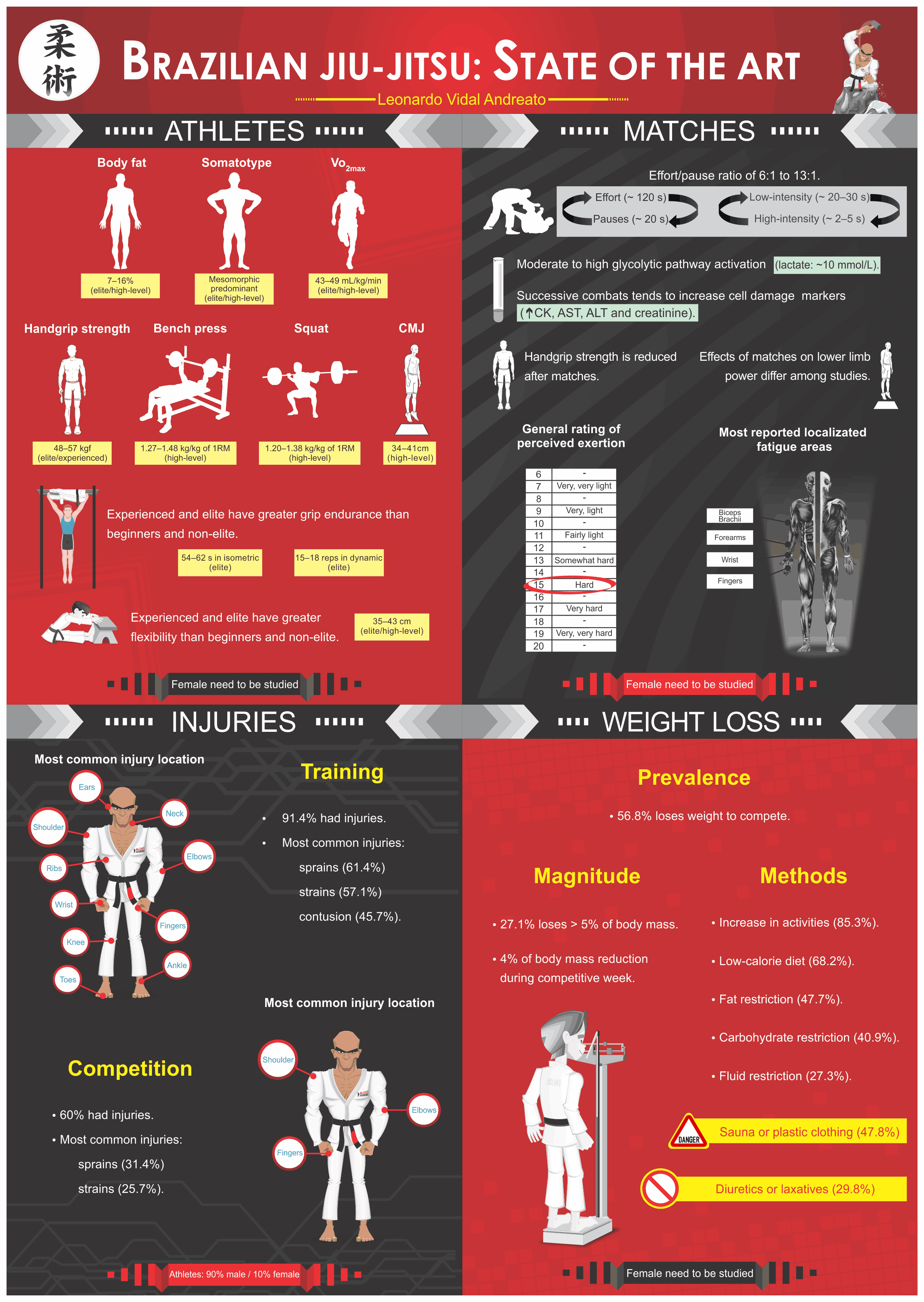
Brazilian Jiu-Jitsu preparation framework showing the integration of physical and mental components. BMJ Blogs
What to Expect on Competition Day
Australian BJJ competitions have their own unique atmosphere. The AFBJJ and other organizations like the BJJ Australian Open run tournaments throughout the year across major cities.
Before Your Match
- Weight check: Arrive early for the weigh-in process. Most Australian competitions allow a small allowance for the gi weight.
- Warm-up area: Find a space to warm up and stay loose—but don't exhaust yourself before your match.
- Nervous energy: Nearly every competitor, even experienced ones, report pre-match jitters. This is normal and actually beneficial when managed properly.
During the Competition
Your first BJJ competition will likely feel overwhelming—the noise, the crowd, the adrenaline. Research by Silva et al. (2019) confirmed that "BJJ athletes experience greater amounts of both psychological and physical stress during the competition than practice."
Common beginner experiences include:
- Adrenaline dump: Many beginners report feeling exhausted after just a minute of competition, regardless of fitness level. This is your body's natural response to stress.
- Time distortion: Five-minute matches can feel like they last forever or pass in a blink. Stay present by focusing on your breathing.
- Technical regression: Under pressure, complex techniques often fail. This is why focusing on fundamentals is crucial for beginners.
The Lesser-Known Benefits of Competition
Beyond testing your skills, BJJ competitions offer unique benefits that aren't immediately obvious:
- Accelerated learning: A five-minute competition match can teach you more about your technique gaps than weeks of regular training.
- Mental resilience: Studies from the University of Mary show that BJJ competitions build "mental toughness, resilience, grit, self-efficacy, and self-control" that transfer to other areas of life.
- Community connection: The Australian BJJ community is particularly tight-knit. Competitions introduce you to the broader BJJ family and potential training partners.
- Flow state access: Psychology research identifies BJJ as particularly conducive to achieving "flow"—a state of optimal performance characterized by complete absorption in the task and altered time perception.
Avoiding Common Beginner Mistakes
After analyzing hundreds of beginner competitions, coaches have identified these common pitfalls:
- Cutting weight inappropriately: Drastic weight cuts impair performance and are unnecessary at the beginner level.
- Going for submissions too aggressively: Position before submission is especially true in competition. Establish control first.
- Ignoring the scoreboard: Understanding the scoring system and match timing is crucial for strategic decisions.
- Failure to manage energy: Many beginners go all-out in the first minute and gas themselves.
Conclusion: Just Start
Perhaps the most important advice comes from experienced competitors who consistently say: "I wish I'd started competing sooner."
While preparation is important, there's no substitute for the experience itself. As one Australian BJJ black belt put it in the BJJ Tournament Preparation Questionnaire: "It's never maybe. You are always ready."
The journey of competing in BJJ is less about winning your first tournament and more about starting a process of continuous improvement—physically, technically, and mentally. The mats don't lie, and competition provides the most honest feedback about where your jiu-jitsu truly stands.
So set a date, register for a tournament, and begin the exciting journey of BJJ competition. The growth you'll experience extends far beyond the mats.
About the Author: This article was created by bringing together insights from sports psychology research, experienced BJJ practitioners, and competition organizers to help Australian BJJ beginners navigate their competition journey.
Sources: